
Sub-Total: $0.00
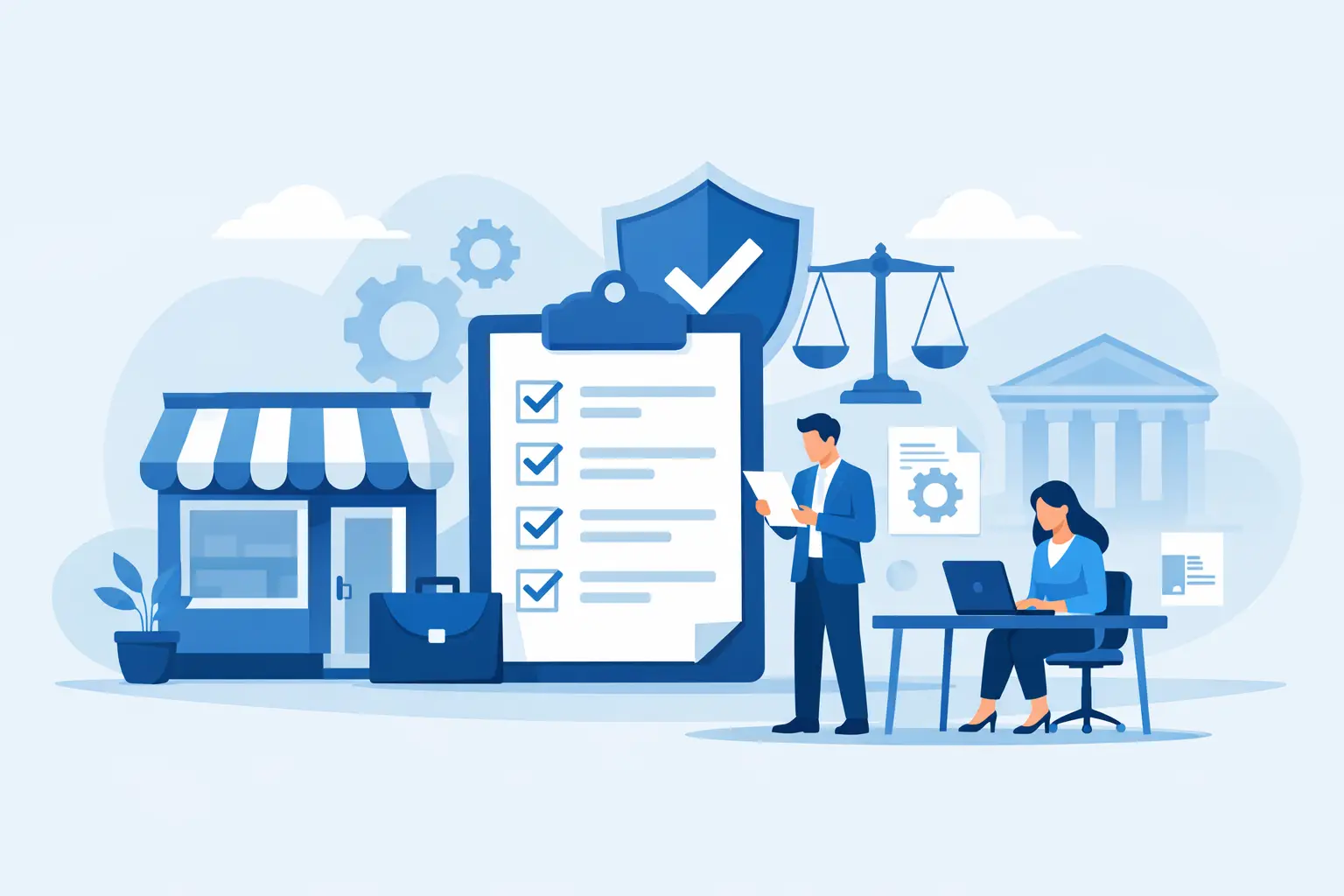
How to Start Small Business Compliance Right
The fastest way to create stress in a new business is to treat compliance like something you will figure out later. If you are asking how to start small business compliance, the best time is before your first sale, first hire, or first client contract. A simple, early system helps you avoid missed registrations, incomplete records, and preventable delays that can slow growth.
For many small business owners, compliance feels bigger than it is. The word sounds formal, but the work usually comes down to a few practical questions. Is your business registered correctly? Do you have the right licenses or permits? Are your records organized? If you hire people, are you handling identity verification, screening, and required forms the right way?
What small business compliance really means
Small business compliance is the process of meeting the legal, administrative, and operational requirements that apply to your business. Some rules are general, such as registering your business and keeping tax records. Others depend on your industry, your location, and whether you have employees, contractors, or regulated services.
That is why there is no one-size-fits-all checklist. A cleaning company, a trucking business, a home health agency, and a tutoring service may all need very different approvals and documentation. The goal is not to become an expert in every regulation. The goal is to know which requirements apply to you and create a reliable way to keep up with them.
How to start small business compliance with the basics
Start with your business structure and registration. Before anything else, make sure your business is formed properly under the name and structure you intend to use. Sole proprietorships, LLCs, partnerships, and corporations each come with different tax treatment, paperwork, and liability considerations. If you are still deciding, it may help to speak with a qualified advisor so your setup matches how you plan to operate.
Next, confirm your federal, state, and local requirements. In Florida, for example, your obligations may include state registrations, local business tax receipts, and industry-specific licenses depending on your services. Some owners assume that forming an LLC covers everything. It does not. Business formation is only one part of compliance.
Then create a central place for your records. This can be digital, paper-based, or a combination of both, but it needs to be consistent. Keep formation documents, tax IDs, licenses, insurance certificates, permits, and renewal dates together. Small businesses often run into trouble not because they never completed a requirement, but because they cannot find proof when they need it.
Know which rules apply to your industry
This is where compliance becomes more specific. If your business works in healthcare, transportation, education, food service, security, or any field involving regulated credentials, screening, or safety requirements, your compliance responsibilities can expand quickly.
You may need employee certifications, continuing education, fingerprint-based screening, background checks, or role-specific testing. If you serve vulnerable populations, handle sensitive information, or work under contract with larger organizations, the expectations may be even higher. In those cases, basic business registration is only the beginning.
It helps to think in layers. The first layer is business compliance, which covers registration, licensing, tax setup, and records. The second layer is workforce compliance, which includes hiring documentation, screenings, training, and qualifications. The third layer is operational compliance, which can include data handling, safety policies, reporting, and renewal management.
When owners miss requirements, it is often because they focus only on the first layer.
Hiring changes your compliance responsibilities
If your business will have employees, even one part-time worker, your compliance process needs to expand right away. Hiring brings a new set of responsibilities tied to documentation, classification, identity verification, and recordkeeping.
At a minimum, you need to be sure workers are classified correctly, required employment forms are completed, and hiring records are stored properly. Depending on the role and the industry, you may also need background screening, fingerprinting, training verification, or certification tracking.
This is one area where shortcuts create lasting problems. Bringing someone on quickly may feel necessary when business is growing, but a rushed process can lead to missing documentation or inconsistent standards between employees. That becomes harder to fix later, especially if you are bidding for contracts or preparing for an audit.
For local businesses in Charlotte County, Sarasota County, and across Florida, using one trusted support partner for screening, testing, and administrative guidance can make the process more manageable. It saves time, but just as important, it creates consistency.
Build a compliance calendar early
One of the most practical answers to how to start small business compliance is this: do not rely on memory. Many compliance tasks are not one-time tasks. They renew, expire, and change.
Licenses may need annual renewal. Certifications may have continuing education requirements. Insurance documents may need updating. Employee files may need periodic review. If your business handles screening, exams, or regulated credentials, deadlines can affect whether someone is allowed to keep working.
A compliance calendar does not have to be complicated. Track what the requirement is, who it applies to, when it expires, and what action is needed. Review it monthly. A simple spreadsheet or shared calendar can be enough at the beginning, as long as someone is actually responsible for maintaining it.
Train for consistency, not just completion
Many owners think compliance is finished once paperwork is filed. In reality, compliance often depends on everyday habits. Are client records handled consistently? Do staff know what documents must be collected before work begins? Is onboarding the same for every hire? Are certifications checked before scheduling someone for regulated duties?
This is where basic training matters. You do not need an overly formal program for every small business, but you do need clear internal expectations. Even a short written process for onboarding, document storage, and renewals can prevent confusion.
The right level of training depends on your size and industry. A solo business may only need a documented checklist. A growing company with multiple employees may need repeatable onboarding and role-specific compliance steps. It depends on how much risk is attached to the work and how many moving parts you are managing.
Common mistakes when starting small business compliance
The most common mistake is waiting until there is a problem. A failed inspection, a delayed application, a rejected contract, or a hiring issue often reveals gaps that have been there from the beginning.
Another mistake is assuming online information is enough without checking whether it applies to your exact business. General guidance can be helpful, but industry rules, local requirements, and workforce obligations vary. What works for one business may leave another exposed.
A third mistake is separating compliance from growth. In practice, they are connected. Strong compliance makes it easier to hire, win new clients, pass screenings, and respond confidently when documentation is requested. It is part of being ready for the next step.
When to ask for support
If you are forming a business, hiring for the first time, entering a regulated field, or expanding into work that requires screening or certifications, support can save you time and reduce mistakes. The key is getting help before your paperwork turns into a backlog.
A good support partner should help you understand what applies to your business, organize the process, and connect you with the services needed to complete it. That may include administrative guidance, fingerprinting, exam services, certification support, or workforce-related documentation. For many business owners, the value is not just in completing tasks. It is in having a dependable process they can repeat.
IG Group supports individuals and local businesses with practical compliance and workforce services in one place, which can be especially helpful when hiring and operational requirements begin to overlap.
A simple way to move forward
If you feel behind, start small. Confirm your business registration, identify any required licenses, organize your records, and map out what changes when you hire. Then look at your industry and ask what additional screenings, certifications, or training requirements apply.
You do not need to solve everything in one day. You do need a clear starting point and a system you will actually maintain. Compliance works best when it is treated as part of running the business, not as a separate project you only revisit under pressure.
The businesses that stay steady are not always the ones with the most resources. Often, they are the ones that put simple systems in place early, ask for help when needed, and keep moving forward with confidence.