
Sub-Total: $0.00
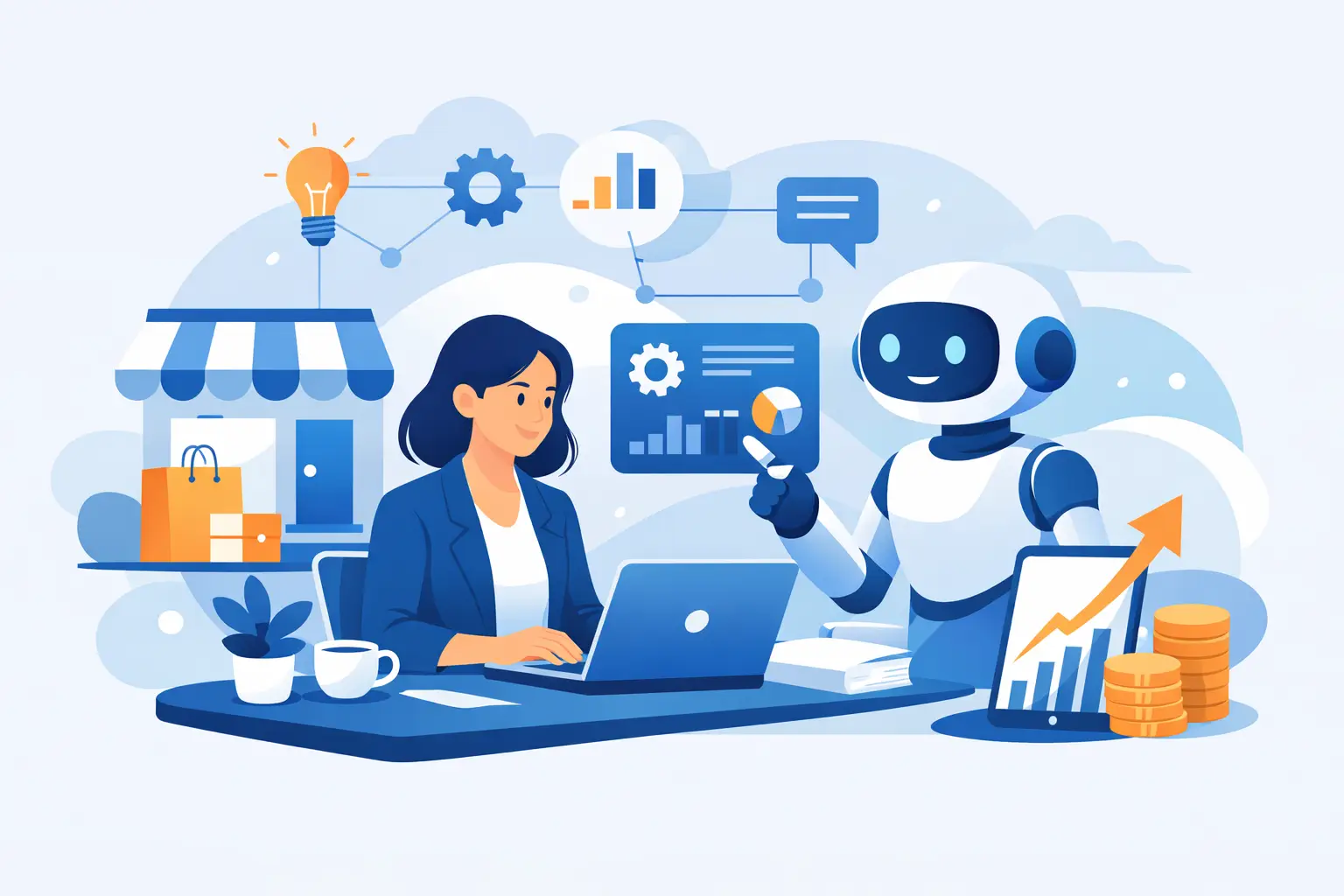
AI for Small Business That Actually Helps
A lot of small business owners are not asking whether ai for small business is real anymore. They are asking a more practical question: will it actually help me serve customers better, stay organized, and save time without creating more work? That is the right question, especially when your days are already full of scheduling, hiring, compliance tasks, customer calls, and the steady pressure to keep everything moving.
For most local businesses, AI is not a replacement for people. It is a support tool. Used well, it can help reduce repetitive work, tighten up communication, and make it easier to respond quickly. Used poorly, it can create confusion, errors, and a customer experience that feels cold. The difference comes down to choosing the right jobs for AI and keeping a person involved where judgment matters.
Where AI for Small Business Makes Sense
The strongest use cases are usually the least flashy ones. Small businesses often get the most value when AI handles tasks that are repetitive, time-sensitive, or text-heavy. Think about the work that slows your team down but still has to be done correctly every time.
That might include drafting email responses, organizing appointment inquiries, summarizing notes after a client conversation, writing first drafts of job descriptions, or turning rough ideas into social media copy. AI can also help with internal operations like creating standard procedures, cleaning up basic spreadsheets, and identifying patterns in customer questions.
If your business depends on appointments, documentation, hiring support, or customer follow-up, those are often good places to start. A small improvement in these areas can free up hours each week. That matters because time is usually the first resource a growing business runs short on.
What AI Should Not Handle Alone
Not every task should be handed to a tool just because it can produce a quick answer. Businesses that deal with regulated services, hiring processes, personal records, identity-related tasks, or sensitive client information need to be especially careful.
AI can help prepare drafts and speed up routine communication, but it should not be trusted as the final decision-maker for compliance, screening, legal interpretation, or anything that affects a person’s eligibility, records, or professional status. Those situations need human review. They also need clear internal processes so your staff knows where automation stops.
This is where many small businesses get into trouble. They use AI to move faster, but they forget to set limits. If a tool is generating responses to customers, your team still needs to check for accuracy, tone, and privacy concerns. Speed only helps if the information is correct.
Start With One Business Problem, Not Ten Tools
One of the biggest mistakes small business owners make is shopping for AI tools before defining the problem. The better approach is to pick one frustrating, repeatable issue and ask whether AI can reduce the manual work involved.
Maybe your team spends too much time replying to the same customer questions. Maybe follow-up emails are inconsistent. Maybe job applicants send incomplete information and your staff has to chase details. Maybe notes from calls sit in notebooks and never make it into a usable system.
When you start with one problem, it becomes easier to test whether a tool is actually useful. You can measure results in a real way. Did response times improve? Did staff save time? Did communication become clearer? Did customers get better service?
That kind of focused trial is much safer than trying to rebuild your whole workflow at once. It also helps your team build confidence. AI adoption tends to go better when people see one practical win instead of being told to change everything overnight.
Practical Uses of AI for Small Business
For many service-based businesses, customer communication is the easiest place to see value. AI can help draft appointment confirmations, follow-up reminders, and answers to common questions. That does not mean every message should be fully automated. It means your staff can start with a solid draft instead of writing from scratch each time.
Hiring support is another area where AI can save time. It can help write clearer job postings, summarize applications, and create interview question outlines. If you are hiring for roles that require screening, certifications, or careful documentation, AI can support the process without replacing human judgment.
Training and internal knowledge are often overlooked. A small business can use AI to turn policy notes, process instructions, or service details into easier training materials for staff. That can be helpful when onboarding new employees or documenting tasks that have always lived in one person’s head.
Marketing can benefit too, but this is where businesses should stay realistic. AI can draft content ideas, email campaigns, and service descriptions. It can save time on first drafts. But if the final message sounds generic or does not reflect your community, your audience will feel it. Local businesses grow on trust, and trust is hard to build with copy that sounds like everyone else.
The Trade-Offs Small Businesses Need to Understand
AI can reduce workload, but it also introduces new responsibilities. Someone has to review outputs, correct mistakes, and decide what information should never be entered into a tool. There is also the question of consistency. If different staff members use AI in different ways, your business voice and standards can drift.
Another trade-off is overreliance. If a team becomes too dependent on AI for writing, responding, or organizing, basic skills can weaken. That becomes a problem when a situation is complex, sensitive, or unusual. Businesses still need staff who can think clearly, communicate professionally, and make sound decisions without a tool doing the work for them.
There is also a customer experience question. Some clients appreciate fast automated help. Others want reassurance that a real person is involved, especially when the service relates to employment, documentation, or compliance. It depends on the interaction. A reminder text can be automated. A confusing application issue usually should not be.
How to Introduce AI Without Disrupting Your Team
The best rollout is usually simple. Choose one process. Test one tool. Assign one person to own the trial and gather feedback from the team. Set a short timeline, then review what improved and what did not.
It helps to create a few basic rules from the start. Decide what kinds of tasks AI can support, what information should stay out of the system, and which outputs always require human review. If your team handles personal information, identity verification steps, or background-related workflows, that guidance should be especially clear.
Training matters more than many owners expect. People do not just need access to a tool. They need examples of good use, bad use, and the limits. A dependable process beats enthusiasm every time. When staff understand the purpose, they are more likely to use AI in a way that actually helps the business.
For local companies that already manage a lot of moving parts, this measured approach is often the most sustainable. In communities across Florida, small business owners are balancing growth with compliance, staffing, and customer care. AI can support that work, but only when it is introduced with intention.
Keep the Human Advantage
The businesses that benefit most from AI are usually the ones that already know their strengths. They use technology to support responsiveness, not replace relationships. They speed up admin work so they can spend more time solving real problems for customers.
That matters for businesses built on trust. If your clients come to you because they want clarity, personal guidance, and dependable follow-through, AI should reinforce those qualities. It should help your team respond faster, stay more organized, and communicate more clearly. It should not make your service feel distant.
At IG Group, that same practical mindset shapes how support should work: use the tools that make progress easier, keep people at the center, and stay focused on what helps clients move forward with confidence.
If you are considering AI for your small business, start with the task that steals the most time from your day. A smart first step is usually enough to show you what belongs in the hands of a tool, and what should always stay in the hands of a trusted person.