
Sub-Total: $0.00
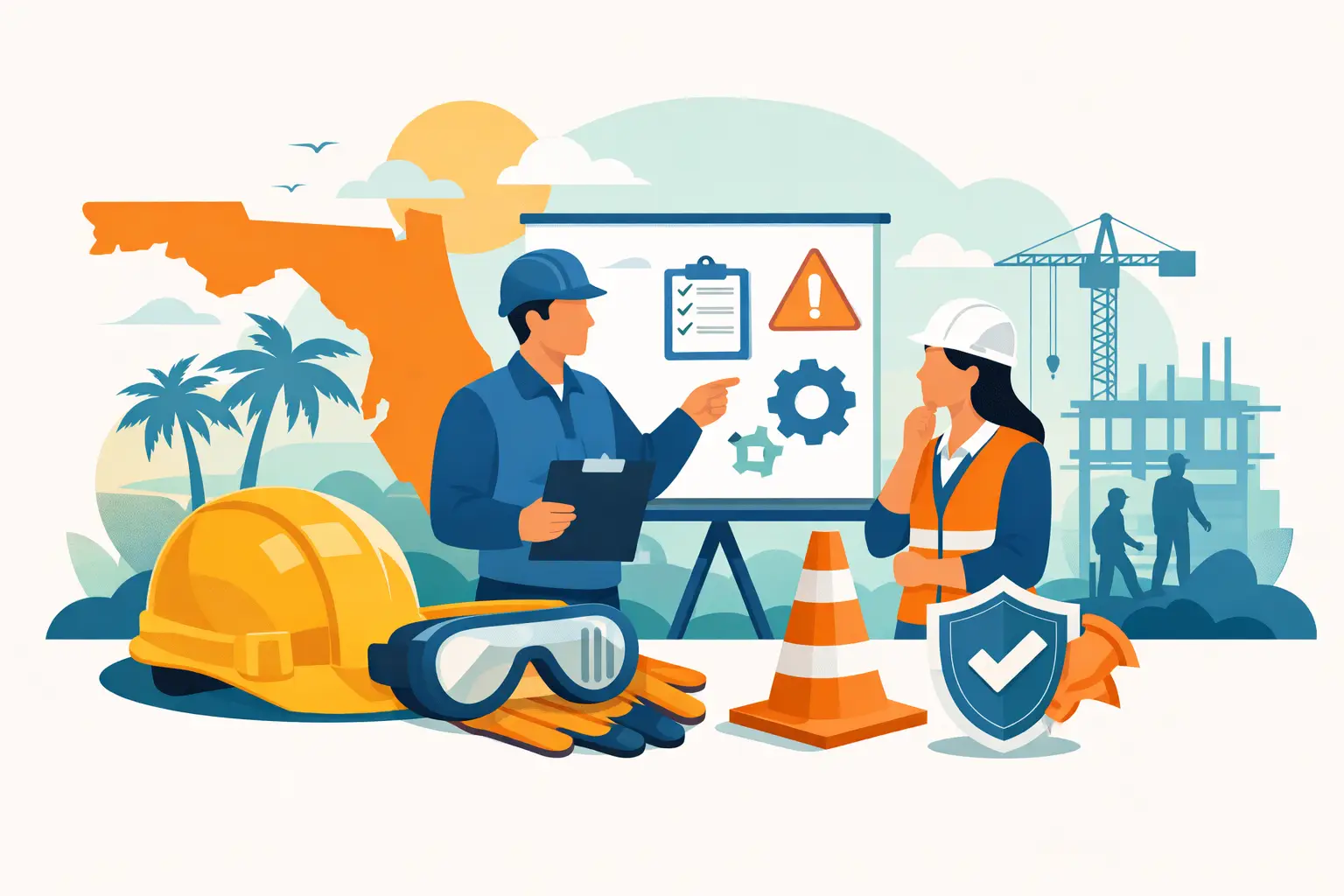
Choosing Florida OSHA Certification Classes
A job offer can move quickly, especially in construction, maintenance, warehousing, and property services. When an employer asks whether you have OSHA training, knowing which course fits your role can prevent delays. Florida OSHA certification classes can help you prepare for safer work, meet employer expectations, and show that you take workplace responsibilities seriously.
The first point to understand is that OSHA does not generally issue a universal professional license called an “OSHA certification.” Most people are referring to OSHA Outreach Training, commonly known as OSHA 10 or OSHA 30. These courses provide safety education and result in a Department of Labor Outreach Training Program completion card when completed through an authorized provider.
That distinction matters. The right class depends on your industry, your job duties, your employer’s requirements, and whether you are entering the workforce or moving into a leadership role.
What Florida OSHA Certification Classes Usually Mean
When people search for Florida OSHA certification classes, they are usually looking for training that addresses workplace hazards and gives them documented proof of completion. OSHA Outreach courses are among the most recognized options because they cover practical safety topics workers may encounter on the job.
The two main industries served by Outreach Training are construction and general industry. Construction training is often relevant for workers involved with job sites, remodeling, roofing, electrical work, landscaping, road work, and similar trades. General industry training can be a better fit for manufacturing, warehouses, healthcare support environments, retail operations, maintenance departments, and many non-construction workplaces.
A course should match the environment where you will work. A construction worker learning about fall protection, scaffolding, excavation, and ladder safety needs different examples than a warehouse employee working around forklifts, chemical labels, and machine guarding.
OSHA 10: A Starting Point for Many Workers
OSHA 10 is designed primarily for entry-level workers. It introduces common hazards, worker rights, employer responsibilities, and basic methods for recognizing unsafe conditions. For someone beginning a new role, returning to work after time away, or applying to an employer that requests basic OSHA training, this is often the appropriate starting point.
An OSHA 10 course is not a substitute for hands-on training from an employer. A new employee still needs site-specific instruction, equipment training, and supervision. However, the course can give workers a stronger foundation before they step onto a job site or into a new facility.
OSHA 30: More Depth for Supervisory Responsibilities
OSHA 30 offers more extensive safety education and is commonly selected by supervisors, forepersons, crew leads, safety coordinators, and experienced workers who take on additional responsibility. It goes beyond basic awareness by spending more time on hazard prevention, safety management, and the responsibilities involved in leading others.
Not every worker needs OSHA 30. If an employer only requests OSHA 10, taking a longer course may not be necessary. On the other hand, OSHA 30 can be a practical choice for people preparing for promotion, seeking a role with oversight duties, or building confidence before managing crews.
How to Choose the Right OSHA Course
The most efficient choice begins with one question: What does your employer, prospective employer, or contract require? Job postings may specify “OSHA 10 Construction,” “OSHA 30,” or simply “OSHA card.” If the language is unclear, ask whether the work falls under construction or general industry and which Outreach course they recognize.
You should also consider your day-to-day responsibilities. A person assisting on a construction site has different training needs than a small business owner responsible for workplace policies. Training should support the actual risks you are likely to face, not just check a box on an application.
For many Florida workers, weather also adds a practical layer to safety planning. Heat exposure, sudden storms, wet surfaces, and outdoor work schedules can create real hazards. OSHA training can help workers recognize broader safety principles, while employers remain responsible for providing procedures that address the specific conditions of each worksite.
Look for Authorized, Legitimate Training
A completion card only carries value when training comes through an authorized OSHA Outreach Training provider. Before enrolling, confirm that the course is clearly identified as OSHA Outreach Training and that the trainer or training organization is authorized to deliver it.
Be cautious of vague claims such as “OSHA approved certification” without details about the course type, industry, or provider authorization. A legitimate provider should be able to explain whether the course is OSHA 10 or OSHA 30, whether it is construction or general industry, and what proof of completion participants receive.
It is also helpful to ask how the course is delivered. Some learners prefer live instruction because they can ask questions and discuss real workplace examples. Others need an online option because they are balancing work, family, transportation, or a changing schedule. Both formats can be useful when they meet program requirements and come from an authorized source.
Training Is Only One Part of Workplace Safety
An OSHA card is valuable, but it does not mean a worker is qualified to perform every task. Specialized work may require additional training, documented evaluation, licensing, or employer-provided instruction. This can include operating certain equipment, working with bloodborne pathogens, entering confined spaces, handling hazardous materials, or performing electrical tasks.
Employers also have duties that cannot be transferred to a course provider. They must communicate hazards, provide appropriate protective equipment when required, train employees on site-specific procedures, and maintain a workplace that follows applicable safety standards.
For workers, the best approach is to treat OSHA training as a foundation. Use what you learn to ask better questions, recognize unsafe conditions, and speak up when something does not look right. A strong safety culture depends on workers and employers paying attention before an incident occurs.
Planning Your Next Step in Florida
If you are job searching, review the requirements in the positions you want before selecting a course. If you are already employed, speak with your supervisor or human resources contact about the training your workplace recognizes. This is especially helpful when a company has its own onboarding process or requires additional industry-specific instruction.
Small business owners should take a similarly practical approach. Start with the types of work your team performs, the hazards employees encounter, and the training records you need to maintain. OSHA Outreach Training may support employee awareness, but it should be part of a broader workplace safety plan that includes clear procedures and regular communication.
For adults balancing career goals with everyday responsibilities, convenience matters. In Charlotte County, Sarasota County, and across Florida, choosing a local support partner that can help you understand training requirements, schedule services, and move through professional milestones with confidence can make the process feel more manageable.
IG Group supports individuals and local businesses working toward career readiness, compliance needs, and professional development. Personalized guidance can be especially useful when you are unsure whether you need OSHA 10, OSHA 30, construction training, general industry training, or a separate requirement for your field.
The right class is the one that fits the work ahead of you and comes from a provider you can trust. Start with the job requirement, verify the training source, and use the knowledge you gain to build safer habits wherever your next opportunity takes you.