
Sub-Total: $0.00
How to Complete Live Scan Fingerprinting
A missed form, the wrong ID, or a name that does not match your application can slow down a job offer or license review fast. If you are trying to figure out how to complete live scan fingerprinting, the good news is that the process is usually straightforward when you know what to bring, what to expect, and where mistakes tend to happen.
Live scan fingerprinting is an electronic fingerprinting process used for background checks. Instead of using ink and paper cards, your fingerprints are captured digitally and submitted to the appropriate agency or requesting organization. Many people need it for healthcare jobs, education roles, childcare positions, state licensing, volunteer work, or other regulated industries. The exact steps can vary a little depending on who requested your fingerprints, which is why preparation matters.
How to Complete Live Scan Fingerprinting Without Delays
The first step is confirming who is asking for the fingerprinting and why. In many cases, an employer, licensing board, state agency, or another authorized organization will give you a request form or instructions. That paperwork matters because it tells the live scan provider where the fingerprints need to go. If you show up without the right form or with incomplete information, your appointment may need to be delayed.
Before you schedule, review your paperwork carefully. Check your full legal name, date of birth, and any agency numbers or codes listed on the form. If your current ID uses a different version of your name than the paperwork, that is something to fix before the appointment if possible. Even small inconsistencies can create problems later when records are reviewed.
You will also want to make sure the provider offers live scan services for your specific purpose. Some requests are tied to state systems, while others may involve different submission requirements. A dependable provider will help confirm that your paperwork is complete and that your fingerprints are being sent through the proper channel.
What to Bring to a Live Scan Appointment
Most people need two things above all else: a valid government-issued photo ID and the request form from the agency or employer that requires the fingerprinting. In some situations, you may also need a secondary document or additional identifying information, depending on the reason for the scan.
Your ID should be current, legible, and match the information on your application materials as closely as possible. A driver license, state ID, passport, or other accepted government identification is often used. If you are not sure whether your identification will be accepted, it is better to ask before arriving than to risk a wasted trip.
It also helps to bring any confirmation details related to your appointment. If the provider requested a printed form, bring the printed form. If you received instructions from an employer or licensing agency by email, keep them available. The more complete your paperwork is, the easier it is to move through the process without confusion.
What Happens During the Appointment
If you have never had live scan fingerprinting before, the process is usually quicker and less complicated than people expect. After check-in, your identification and paperwork are reviewed. This is where errors are often caught, which is another reason accurate documents are so important.
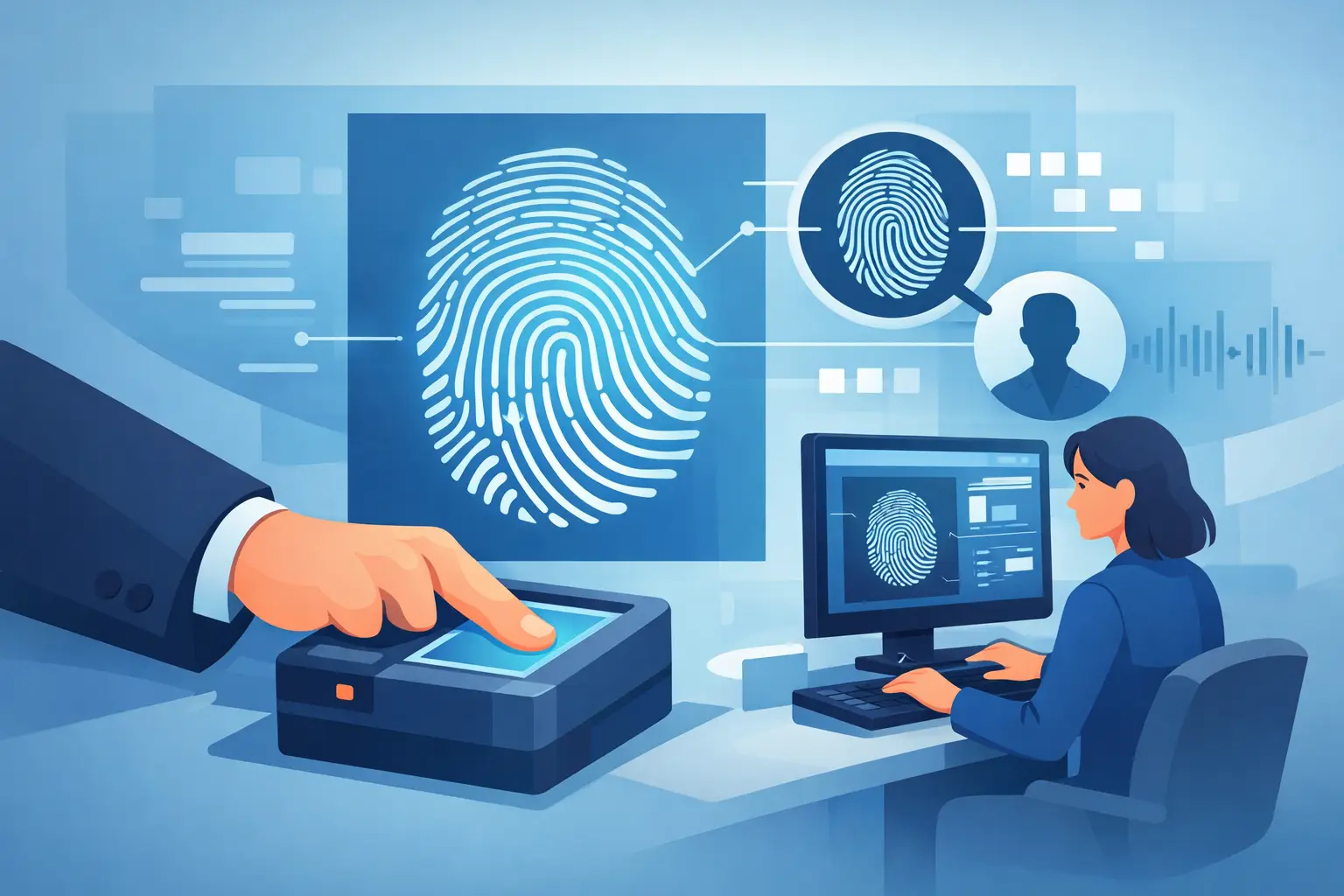
Next, the technician captures your fingerprints electronically using a live scan machine. Your fingers are rolled or placed on a glass surface so the system can record each print clearly. There is no ink involved, and the technician may repeat a finger or hand if the image quality is not good enough the first time.
Some people worry that dry skin, worn fingerprints, or minor hand irritation will automatically cause a problem. Sometimes those issues do make it harder to capture clean prints, especially for people who work with their hands a lot. Still, an experienced technician can often improve the scan by adjusting technique, asking you to relax your hand, or recapturing specific prints until the quality meets submission standards.
Once the prints are taken, they are submitted electronically to the agency or agencies listed on your form. You will usually receive a transaction record, receipt, or confirmation that the submission was completed. Keep that document in case your employer or licensing board asks for proof that you completed the requirement.
Common Reasons Live Scan Fingerprinting Gets Delayed
Most delays are preventable. The biggest issue is incomplete or incorrect paperwork. If a requesting agency number is missing, if the wrong form is used, or if your personal information does not match your identification, the fingerprints may not be processed the way you expect.
Another common issue is waiting too long to schedule. Some people receive a job offer, licensing notice, or application packet and assume fingerprinting can be handled at the last minute. That can be risky if there are appointment shortages, if a form needs clarification, or if the agency has strict deadlines.
Fingerprint quality can also affect timing. This does not mean something is wrong with your background. It simply means the image itself may not be readable enough for processing. If your prints are difficult to capture, your provider may try again during the appointment or advise you on next steps.
A practical way to avoid delays is to book with a provider that offers one-on-one guidance, especially if this is your first time. For many job seekers and applicants, having a local service team explain the process clearly makes a stressful requirement feel much more manageable.
Tips for a Smoother Live Scan Experience
If you want the appointment to go smoothly, focus on the basics. Read the form before your appointment instead of in the waiting room. Double-check your name and ID. Arrive with enough time so you are not rushed. If your hands are very dry, using lotion earlier in the day may help, though your fingers should not be greasy or overly wet at the time of scanning.
It is also smart to ask questions before your visit if anything is unclear. For example, some applicants are not sure whether they need live scan fingerprinting or a traditional fingerprint card. Others are unsure whether they need results sent to one agency or more than one. Clarifying those details ahead of time can save time and frustration.
If English is not your first language, choosing a provider that communicates clearly and patiently can make a big difference. Important compliance steps are easier to complete when you feel comfortable asking for help.
How Long It Takes to Get Results
One of the most common questions people ask is when the background check results will be ready. The honest answer is that it depends on the requesting agency, the type of screening, and processing times within the relevant system. The live scan provider captures and submits your fingerprints, but the final timeline is usually controlled by the agency reviewing the results.
For that reason, it helps to complete fingerprinting as early as you can in your hiring or licensing process. If your employer, school, or board has a deadline, do not assume the results will appear immediately just because the appointment itself was quick.
What you can control is choosing a provider that submits correctly, reviews your documents carefully, and helps reduce the chance of preventable errors. That does not guarantee instant processing, but it does improve your chances of keeping your application moving.
When to Ask for Help
If your instructions are confusing, your name has changed recently, your ID does not match your paperwork, or you are not sure which form you need, ask for help before the appointment. This is especially important for applicants in regulated fields, where one missing detail can affect onboarding or credentialing.
For people balancing job searches, training programs, exams, and compliance requirements all at once, convenience matters. Working with a community-based provider that understands employment-related services can make the process feel less fragmented. In Charlotte County, Sarasota County, and across Florida, many applicants are looking for exactly that kind of practical support.
Live scan fingerprinting is not the most complicated step in your professional journey, but it is one of those steps that needs to be done right. Bring the correct documents, verify your information, and give yourself enough time to complete the process carefully. A little preparation now can help you move forward with more confidence and fewer setbacks.