
Sub-Total: $0.00
9 Real Estate Exam Preparation Tips
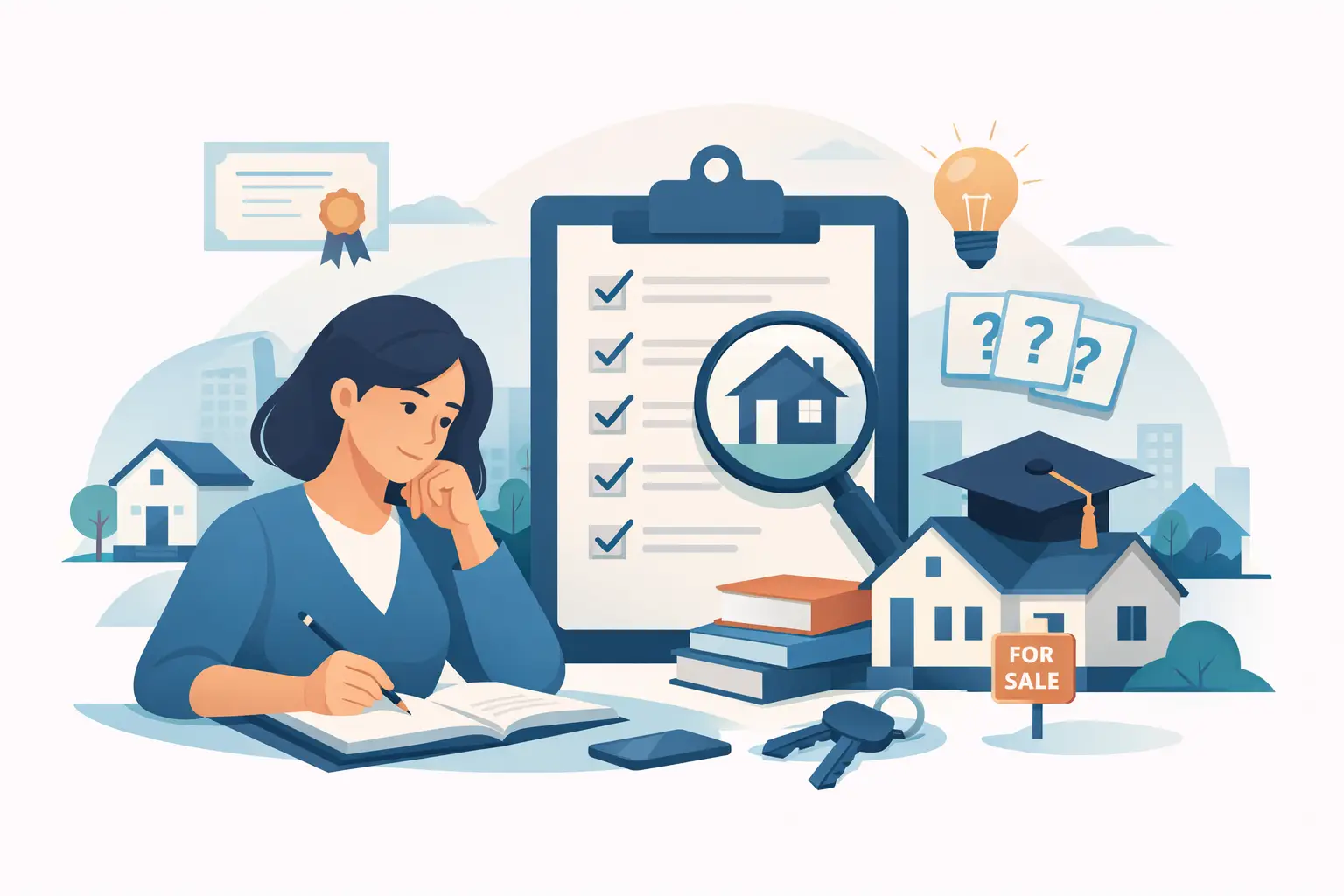
The week before a real estate licensing exam is where good intentions usually get tested. Some people start rereading everything. Others jump between flashcards, videos, and practice questions without a plan. The better approach is simpler. These real estate exam preparation tips are meant to help you study with purpose, keep your confidence steady, and walk into the exam knowing what to expect.
Real estate exam preparation tips that actually help
A real estate exam is not just a memory test. It checks whether you can recognize concepts, apply rules, and avoid common mistakes under time pressure. That means your study plan needs to do more than cover material once.
One of the biggest mistakes adult learners make is confusing familiarity with readiness. If you read a chapter and think, “I remember this,” that is not the same as being able to answer a scenario-based question correctly. A stronger strategy is active recall. Close the book, answer questions from memory, and explain the concept out loud in plain language. If you cannot teach it simply, you probably need another review.
It also helps to study in layers. Start with broad topics like contracts, agency, finance, fair housing, and property ownership. Then go narrower and focus on the details that tend to cause confusion, such as timelines, disclosures, exemptions, and math formulas. This keeps you from getting stuck on minor details before you understand the bigger picture.
Start with the exam blueprint, not your notes
Before you build a study schedule, confirm what your licensing exam covers. Real estate exams usually include both national content and state-specific content. In Florida, that state portion matters because even strong general knowledge will not carry you if you miss questions tied to local law and licensing rules.
This is where many test takers lose time. They study based on the order of their class materials instead of the exam structure. Those are not always the same thing. If agency relationships and contracts carry more weight than another topic, your schedule should reflect that.
A practical way to handle this is to sort topics into three groups: strong, shaky, and weak. Strong topics need light review. Shaky topics need repeated practice. Weak topics need focused attention early, while you still have energy and time to improve. This is more efficient than giving every chapter equal treatment.
Use practice questions the right way
Practice questions are one of the best real estate exam preparation tips, but only if you use them for diagnosis instead of just scoring. If you miss a question, do not stop at the correct answer. Ask why the other choices were wrong. That is often where the real learning happens.
Patterns matter more than one bad result. If you keep missing financing questions, that is a signal. If you are doing well on vocabulary but struggling with application questions, that is a different signal. Let your mistakes tell you what to review next.
Timed practice is important too, but not at the very beginning. First learn the content without pressure. Then add time limits once you have a base. Otherwise, you train yourself to rush while still confused, and that can damage confidence.
There is also a trade-off here. Some students want to take full-length practice exams every day. That can help with endurance, but it can also become repetitive if you are not reviewing deeply afterward. For most people, a mix works better: shorter focused sets during the week and a full-length exam once or twice closer to test day.
Build a study plan that fits adult life
Most real estate candidates are not studying in a quiet dorm room with unlimited free time. They are working, parenting, commuting, or managing other responsibilities. That is why a realistic schedule usually works better than an ambitious one.
If you tell yourself you will study four hours every night and you know that is unlikely, you are building frustration into the plan. A steadier option is 45 to 90 minutes of focused work on most days, with one longer session for review. Consistency beats intensity when the exam is a few weeks away.
Short study blocks can still be productive if they are specific. Spend one session on contracts only. Use another for real estate math. Use another for state laws and license rules. Narrow sessions reduce mental switching, and that usually improves retention.
If English is not your first language, give yourself extra time for question wording. Real estate exams often include long answer choices that sound similar. In that case, practice reading carefully and identifying the key issue in the question before looking at the answers. That one habit can prevent avoidable errors.
Focus on the topics people avoid
Every exam has a few areas students tend to put off. Real estate math is one of them. License law is another. People often avoid these topics because they feel dry or intimidating, then hope stronger sections will make up for the weakness.
That is risky. You do not need to love these sections, but you do need a workable method. For math, memorize the core formulas and practice enough examples that you can recognize what the question is asking. For law and regulations, focus on distinctions – what is required, what is prohibited, who is responsible, and when deadlines apply.
This is a good place to slow down. Real estate test questions often hinge on one word. “Must,” “may,” “first,” and “best” can change the entire answer. If you tend to read quickly, train yourself to pause before selecting an option that only looks familiar.
Don’t let test anxiety run your preparation
A lot of people who know the material still underperform because they study from a place of panic. They switch resources constantly, stay up too late, and interpret every missed question as proof they are not ready. That cycle is exhausting and usually makes recall worse.
Confidence on exam day is not about feeling perfect. It comes from repetition, familiarity, and a reasonable plan. If your practice scores are improving, even gradually, that is progress. If a topic still feels weak, do targeted review instead of restarting everything from the beginning.
The final 48 hours matter too. Cramming late into the night can leave you mentally foggy. A better move is to review high-yield concepts, check the exam logistics, and give yourself enough rest to think clearly. If your exam is scheduled through a professional testing center, arrive with the required identification and a calm routine. Small logistical problems can create stress that has nothing to do with your knowledge.
Test-day habits that protect your score
When the exam starts, read the full question before looking for shortcuts. Some items are designed to reward careful reading, not speed. If two answers seem correct, look for the one that best matches legal standards, fiduciary duty, or the exact fact pattern presented.
Use the flag-and-return method when needed. If a question stalls you for too long, mark it and move on. Spending several minutes on one problem early can drain time and confidence. Often, later questions help trigger your memory.
Pay attention to mental stamina. If you feel yourself rushing, reset with one slow breath and the next question only. You do not need to win back lost time all at once. You just need to stay accurate.
It also helps to avoid post-question second-guessing. Your first answer is not always right, but changing answers out of anxiety is different from changing them because you spotted a clear mistake. If you review flagged items at the end, look for evidence, not feelings.
When extra support makes sense
Some candidates can prepare independently and do very well. Others benefit from structured help, especially if they have been out of school for years, are balancing several responsibilities, or have already taken the exam once without passing.
Support can make a real difference when it is practical and personalized. A guided review, a clear testing path, and a reliable place to ask questions can reduce wasted time. For many adult learners in Florida, that kind of local support matters because it keeps the process organized from study through exam scheduling and related requirements.
If you need that kind of assistance, IG Group works with individuals who are moving toward professional goals and want a dependable place to prepare, test, and keep their next steps on track.
Passing the exam is not about being the smartest person in the room. It is about preparing in a way that is steady, honest, and focused on what the test is really asking. Give yourself a plan you can actually follow, and let each study session move you one step closer to the license you are working for.