
Sub-Total: $0.00
Why Community Based Workforce Training Works
A job application can stall for reasons that have nothing to do with motivation. Someone may be ready to work but still need English support, a certification exam, fingerprinting, or help understanding what employers actually require. That is where community based workforce training makes a real difference. It brings practical career support closer to the people who need it and reduces the time, confusion, and missed steps that often slow progress.
For adults trying to move into a new role, return to work, or qualify for a regulated field, convenience is not a small detail. It can determine whether training gets completed at all. A local, trusted provider can help people stay on track by offering guidance, accountability, and connected services in one place. For small businesses, the same local model can make hiring and compliance easier because support is available nearby and tailored to real operational needs.
What community based workforce training actually means
Community based workforce training is career-focused education and support delivered in a local, accessible setting rather than through a distant or disconnected system. The goal is not just to teach a skill in theory. The goal is to help people become job-ready, meet industry requirements, and complete the steps needed to enter or advance in the workforce.
That often includes more than a class. A person may need exam preparation, a testing appointment, identity verification, language instruction, digital literacy support, or background-screening-related services. When those pieces are scattered across different organizations, many adults lose momentum. When they are coordinated through a community-centered provider, the path becomes clearer.
This matters especially for working adults, career changers, immigrants, and job seekers balancing family responsibilities. They do not need a complicated maze. They need straightforward support, realistic scheduling, and services that connect to actual hiring requirements.
Why local training works better for many adults
The biggest advantage of a local model is proximity to real life. Community-based providers often understand which industries are hiring nearby, what credentials are commonly requested, and where learners tend to get stuck. That makes the experience more practical and less abstract.
A large online course library may look impressive, but it can leave people asking basic questions with no one to answer them. A college program may offer depth, but it may also move at a pace or format that does not fit someone who needs a shorter path to employment. Community based workforce training can fill that gap by focusing on immediate readiness.
There is also a trust factor. Adults are more likely to complete career steps when they feel respected and supported. That sounds simple, but it matters. Many people seeking workforce services are under pressure. They may have lost a job, moved to a new area, changed careers, or need to qualify quickly for work in healthcare, education, security, transportation, or another regulated field. In those moments, clear guidance is as valuable as the training itself.
The strongest programs connect training to required next steps
One reason some workforce programs underperform is that they stop at instruction. A person may finish a class and still be far from employable because the next requirements were never addressed. In practice, workforce progress often depends on a chain of connected actions.
Someone preparing for a healthcare role may need English-language improvement, a certification pathway, an exam appointment, and screening-related services. A job seeker entering a licensed or regulated field may need identity verification and documentation support in addition to learning. A small employer may need help preparing staff for compliance expectations while also managing hiring steps.
When those services are offered through separate providers, delays are common. People miss appointments, misunderstand requirements, or postpone action because the process feels too fragmented. A community provider that combines training, testing, and administrative support can remove a lot of that friction.
That is one reason this model works well for action-oriented clients. It respects the fact that career advancement is rarely one task. It is usually a sequence.
Community based workforce training and small business needs
This approach is not just for individual job seekers. Small businesses often need local workforce support just as much as applicants do. Hiring, onboarding, compliance, and employee development all take time. For small teams, even one delayed step can create strain.
Community based workforce training can support local employers by helping candidates build baseline readiness before they apply or start work. It can also help current staff complete certifications, improve communication skills, or meet industry requirements without sending them through a complicated process.
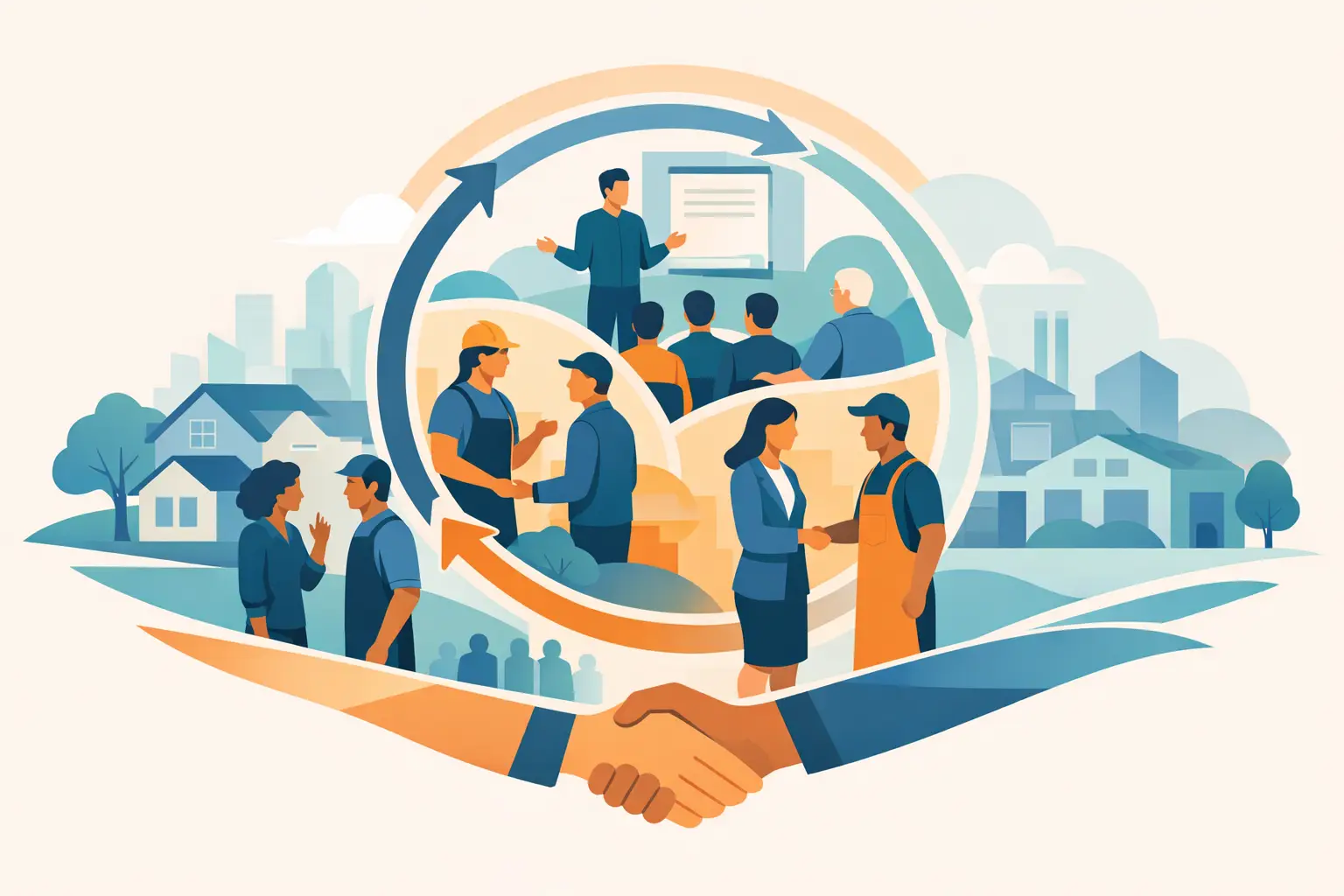
That local connection creates a practical feedback loop. Training providers hear what employers need. Employers gain access to better-prepared workers. Residents have a clearer path into available jobs. Everyone benefits when workforce development reflects the actual conditions of the local economy rather than a generic national model.
In places across Florida, that can be especially useful in sectors where credentials, screenings, customer service skills, and reliable communication all matter. Employers do not just need applicants. They need applicants who can complete the process and start with confidence.
What to look for in a community workforce partner
Not every provider offers the same level of support, so it helps to look beyond course titles. The best fit usually depends on your goal. If you need quick job readiness, a highly academic program may not be the right choice. If you need deep technical specialization, a shorter training pathway may only be a first step.
A strong community workforce partner should make the process easier to understand. That includes explaining what comes first, what comes next, and what documents, exams, or support services may be required along the way. Good guidance helps people avoid preventable delays.
It also helps to choose a provider that understands adult learners. Adults often need flexible scheduling, practical instruction, and one-on-one assistance. They want to know how the training applies to an actual job, not just whether they can pass a lesson.
Another sign of quality is service coordination. If a provider can support learning, testing, and other career-related requirements in one setting, that can save time and reduce stress. For many clients, that kind of convenience is not a bonus. It is what makes follow-through possible.
When this model is the right fit – and when it depends
Community based workforce training is especially effective when the goal is clear and the barriers are practical. It works well for adults who need to improve employability, complete workforce requirements, prepare for exams, or build skills tied to local job opportunities.
It may be less suitable as a stand-alone solution for someone pursuing a profession that requires a long academic pathway or a highly specialized degree. In those cases, community-based training may still play an important role, but more as a bridge. It can help with foundational skills, exam preparation, language development, or support services that keep a larger education plan moving.
That is why the best workforce advice is rarely one-size-fits-all. Some people need a short, direct route into employment. Others need a layered plan with training now and additional credentials later. A good provider will be honest about that and help clients choose the next right step rather than pushing a generic program.
A more practical path forward
For many adults, workforce progress does not fail because they lack ambition. It fails because the process is fragmented. Training is in one place, testing in another, documentation somewhere else, and no one is helping connect the dots. Community based workforce training solves that problem by making career development more local, more coordinated, and more human.
That is also why one community-centered provider can have such an impact. When support includes education, certification-related services, testing access, and professional guidance, people spend less time trying to figure out the system and more time moving through it. Organizations like IG Group reflect that practical model by helping individuals and small businesses handle important workforce steps with dependable local support.
If you are trying to build a career, change direction, or prepare your business for growth, the best next move is often the one that brings training and action closer together. Real progress becomes much more possible when the help you need is nearby, clear, and ready when you are.