

Live Scan Fingerprinting: What to Expect
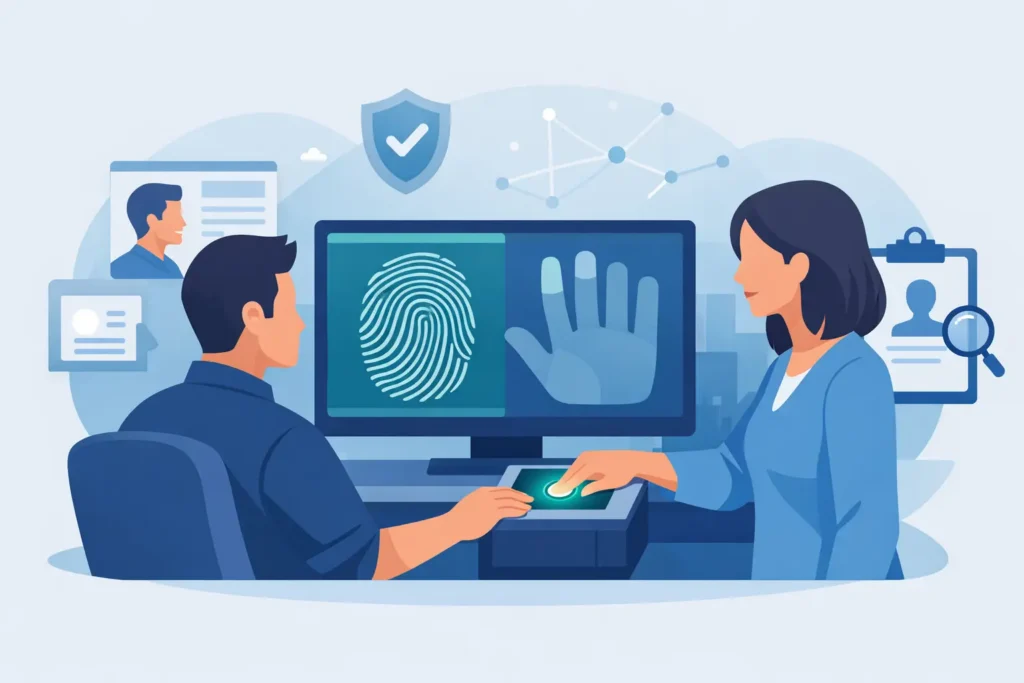
A job offer, professional license, or volunteer role can depend on one small but necessary step: completing a live scan correctly. When an employer or licensing agency asks for fingerprints, the request often comes with forms, codes, and deadlines that can feel confusing. Knowing what the appointment involves can help you arrive prepared, avoid preventable delays, and stay focused on the opportunity ahead.
What Live Scan Fingerprinting Does
Live scan fingerprinting is an electronic process used to capture your fingerprints and send them to the appropriate government agency or authorized system for a criminal history background check. Unlike traditional ink fingerprint cards, a technician captures prints digitally using a specialized scanner.
The fingerprinting provider collects and transmits the information, but does not make hiring, licensing, immigration, or eligibility decisions. Those decisions belong to the employer, agency, board, or organization requesting the background check. This distinction matters. A live scan appointment is the identity-verification step, while the requesting organization manages the review of results according to its own rules.
In Florida, live scan fingerprinting is commonly required for positions and credentials involving healthcare, education, childcare, financial services, real estate, security, transportation, and other regulated fields. It may also be requested for volunteers, contractors, state licensing applications, or other roles where an organization must confirm an applicant’s history.
Not every fingerprint request uses the same process. Some agencies require electronic submission through a specific channel, while others may ask for a fingerprint card or have unique instructions. Always follow the directions provided by the organization that requested your fingerprints.
Why the Details on Your Form Matter
Before your appointment, look closely at the paperwork, email, or portal instructions you received. Many requests include an ORI number, agency code, screening purpose, or other identifying information. These details tell the fingerprinting system where to route your submission.
A missing or incorrect code can send fingerprints to the wrong destination or create extra follow-up work. That does not necessarily mean you have done anything wrong, but it can slow down an application that is already time-sensitive. If a code is unclear, ask the requesting employer or licensing agency to confirm it before your appointment. The organization requesting the screening is the best source for its required information.
This is especially helpful for applicants pursuing a new credential or starting a role with a firm deadline. A few minutes spent checking the form can save days of uncertainty later.
How to Prepare for a Live Scan Appointment
Preparation is simple, but it is worth taking seriously. Bring a current, government-issued photo ID that matches the name used on your application. A driver’s license, state identification card, passport, or other approved identification may be accepted depending on the requirements. If your name has changed recently, bring any documentation the requesting agency instructs you to provide.
You should also bring the request form, confirmation email, ORI number, or other instructions you received. Do not assume the fingerprinting location will know which agency needs your prints without the required details. Each applicant’s submission has a specific destination and purpose.
Your hands should be clean and dry. Heavy lotion, dirt, wet skin, cuts, or peeling fingertips can affect print quality. If you work with your hands, have very dry skin, or have worn fingerprints due to age or certain health conditions, let the technician know. An experienced technician can take extra care, try multiple captures, and explain what happens if the scanner cannot obtain a high-quality image.
Arrive with enough time to check your documents and review the information being entered. Rushing can lead to simple mistakes, such as a misspelled name or a transposed number. Before the submission is finalized, take a moment to confirm that your personal information matches your identification and application materials.
What Happens During the Appointment
Most live scan appointments are brief. The technician verifies your identification, enters the required information, and guides you through placing each finger on the digital scanner. You may be asked to roll your fingers gently or place several fingers on the scanner at once, depending on the equipment and the agency’s requirements.
The scanner checks whether the captured images meet quality standards. If a print is too light, blurred, or incomplete, the technician may ask you to try again. This is a normal part of the process and is meant to reduce the chance that your fingerprints will be rejected later.
Once the fingerprints are captured, the provider submits them electronically when the applicable system allows it. You may receive a receipt or confirmation showing that your fingerprints were collected. Keep that document for your records, particularly if you are working with an employer, recruiter, licensing board, or school that may ask for proof that you completed the requirement.
The appointment itself is not a test, and there is no need to feel nervous about the scanning process. Your role is to provide accurate information, present the proper identification, and follow the technician’s instructions. Clear preparation makes the experience more comfortable for everyone.
After Your Fingerprints Are Submitted
Processing times vary. They can depend on the requesting agency, the type of screening, the completeness of the submission, and whether additional review is needed. A fingerprinting provider generally cannot tell you whether you passed a background check or when an employer or board will make a final decision.
If you are applying for a job, it is reasonable to ask the employer what the next step will be after fingerprinting. If you are seeking a license or certification, check the instructions from the licensing agency for status updates and any additional documents. Staying organized is especially useful when several requirements are due at once, such as an exam, training certificate, application, and background screening.
Sometimes fingerprints must be recaptured because the original images did not meet agency quality standards. This can happen for reasons outside your control, including worn or difficult-to-read fingerprints. If you receive a notice requesting another submission, respond promptly and follow the instructions carefully. A resubmission is not the same as a negative result.
Common Questions That Cause Delays
One common concern is whether a past record automatically prevents someone from getting hired or licensed. The answer depends on the job, the agency, the nature of the record, applicable laws, and the organization’s policies. The fingerprinting location does not decide eligibility. If you have questions about how a history may affect a particular application, speak directly with the employer, licensing board, attorney, or appropriate agency.
Another question is whether a previous fingerprinting appointment can be used again. Sometimes a new employer or agency requires its own submission, even if you completed fingerprinting recently for another purpose. Requirements are specific to the organization and screening type, so confirm before assuming an old receipt will satisfy a new request.
Applicants also occasionally arrive without their required code or form. While a technician may be able to explain what information is missing, only the requesting organization can provide or verify its authorization details. Calling ahead before the appointment is often the fastest way to prevent an unnecessary return visit.
A Practical Step Toward Your Next Goal
Fingerprinting may be one item on a long to-do list, but it often represents real progress: a new position, a professional credential, a volunteer commitment, or a growing business that needs qualified staff. Completing it accurately helps keep your plans moving.
For residents of Charlotte County, Sarasota County, and nearby Florida communities, IG Group offers personalized assistance in a professional setting where clients can handle important career and compliance tasks with confidence. Bring your required identification and agency instructions, ask questions before the scan begins, and treat this appointment as one more practical step toward the goal you are working hard to reach.