
Sub-Total: $0.00
Live Scan vs Ink Fingerprints: Which Is Right?
A fingerprint request can feel like one more hurdle between you and a new job, professional license, or business requirement. Understanding live scan vs ink fingerprints before you schedule helps you arrive with the right paperwork, choose the correct service, and avoid delays that could affect your next step.
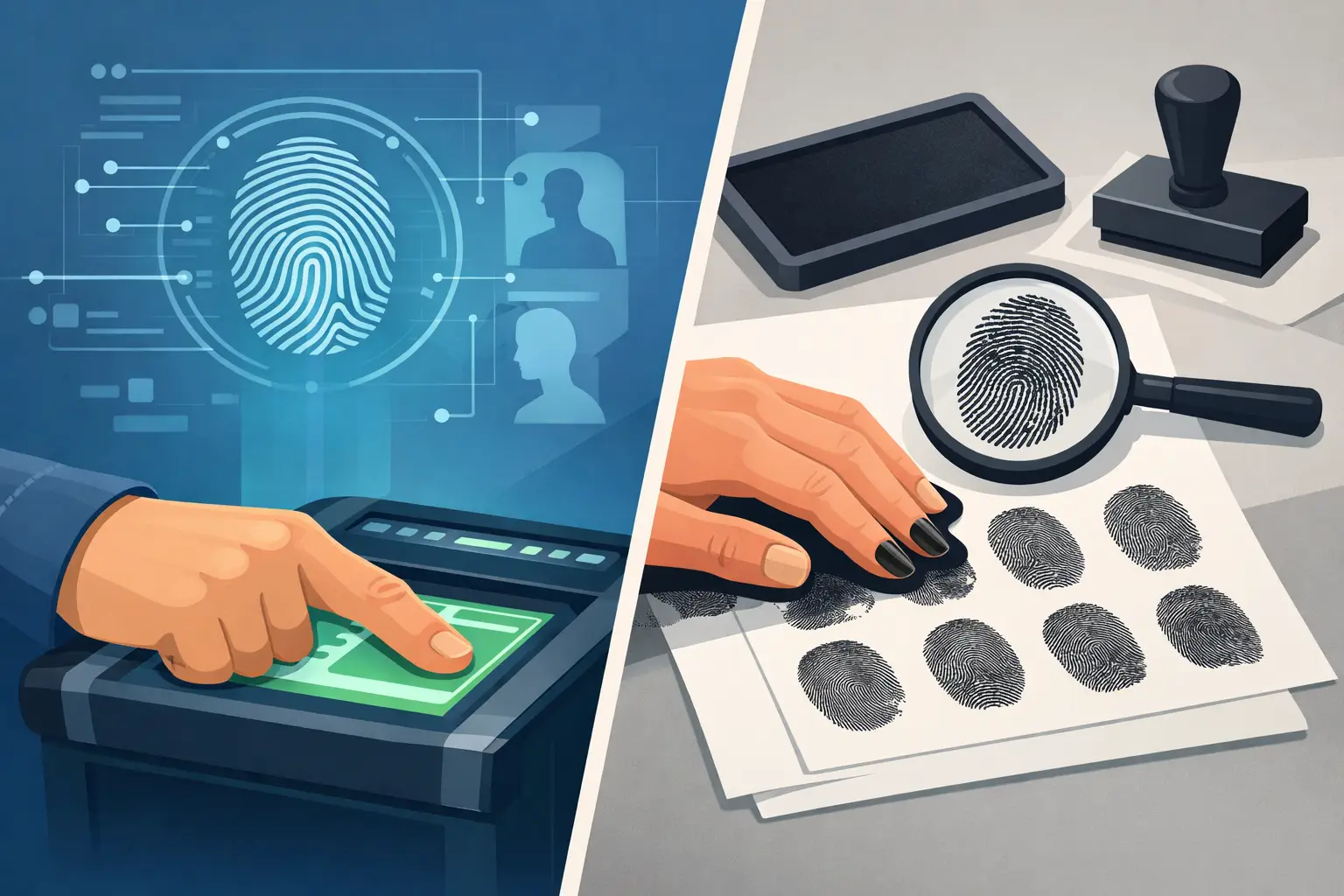
Both methods capture your fingerprints for identity verification and background screening. The main difference is how the prints are collected and delivered. Live Scan uses an electronic scanner, while ink fingerprinting creates a physical fingerprint card. Neither option is automatically better in every situation. The agency, employer, licensing board, or organization requesting your fingerprints determines which one you need.
Live Scan vs Ink Fingerprints: The Basic Difference
Live Scan fingerprinting captures fingerprints digitally. A trained technician guides you as each finger is rolled or pressed across a glass scanning surface. The images are reviewed for clarity and, when accepted, submitted electronically through the appropriate system or provided according to the requesting agency’s process.
Ink fingerprinting is more traditional. The technician applies ink to your fingers and rolls them onto a fingerprint card, often a card specified by the receiving agency. You typically take the completed card with you or send it to the organization that requested it.
For someone focused on getting hired, starting a certification program, or meeting a licensing deadline, the practical question is simple: what does the receiving organization accept? A Live Scan appointment cannot replace an ink card if the agency specifically requires a physical card. In the same way, an ink card may not meet a Florida agency’s electronic submission requirement.
When Live Scan Is Usually Required
Live Scan is commonly used for state-level background screening, regulated occupations, and roles where the requesting organization needs results submitted through an approved electronic process. In Florida, many employment and licensing requirements use electronic fingerprint submissions connected to the state’s screening process.
You may be directed to Live Scan when applying for work in healthcare, education, security, childcare, financial services, transportation, real estate, or another regulated field. Volunteer roles and professional licenses may also require this type of screening. The instructions you receive may include an ORI number, an agency code, or other identifying information that tells the provider where the fingerprint submission should go.
Bring those instructions to your appointment. A correct fingerprint capture is only part of the process. The submission must also be tied to the right applicant information and requesting agency. If you have an ORI number, application reference, or authorization form, keep it available and review it carefully before your visit.
Live Scan is often preferred because electronic images can be checked immediately for quality. If a print is unclear, the technician can capture it again during the same appointment. Electronic delivery can also reduce the time spent mailing cards and waiting for them to arrive. Still, processing times are controlled by the receiving agency and the systems involved, not only by the fingerprint provider.
When You May Need Ink Fingerprints Instead
Ink fingerprints are often required when an employer, licensing board, federal agency, out-of-state organization, or credentialing body asks for a physical fingerprint card. Some agencies use standard fingerprint cards, while others provide their own form with specific fields and instructions.
This method may be the right choice if you are applying for an out-of-state license, completing a federal application, seeking a professional credential, or responding to a request that specifically says to submit fingerprint cards. The organization may ask you to mail the card yourself, include it in an application package, or send it to a designated processing center.
The physical card matters because it carries more than fingerprints. It may require your name, date of birth, signature, address, reason for fingerprinting, employer information, and the signature of the technician. A missing field, incorrect card type, or smudged print can create an avoidable setback. Read the instructions from the requesting organization before your appointment, especially when a deadline is involved.
Speed, Accuracy, and Convenience
Live Scan is generally the more convenient option when the receiving agency supports electronic submission. It avoids shipping time, gives the technician a chance to review image quality immediately, and can make the handoff to the agency more direct. For many Florida job seekers and license applicants, that is why Live Scan is the standard request.
Ink fingerprinting remains a reliable and necessary service for organizations that require cards. It is not outdated or less valid simply because it is paper-based. It follows a different workflow. The trade-off is that the card must stay legible, complete, and protected until it reaches the receiving organization. Mailing time and the agency’s intake process can affect the overall timeline.
Fingerprint quality can matter with either method. Dry skin, worn ridges from manual work, very smooth skin, or temporary damage to the fingertips can make prints harder to capture. A skilled technician can help you position your hands correctly and repeat a capture when needed, but no provider can guarantee that a reviewing agency will never request a new set of prints.
How to Know Which Service to Schedule
Do not rely on a job title alone. Two applicants in similar roles may receive different instructions depending on the employer, state, licensing board, or background screening program. Use the written request as your source of truth.
Before scheduling, confirm whether the instructions say Live Scan, electronic fingerprinting, Level 2 screening, fingerprint card, FD-258 card, or another named form. Check whether an ORI number, agency number, application number, or prefilled card is included. If the instructions are unclear, contact the requesting organization and ask one direct question: “Do you require electronic Live Scan submission or a physical fingerprint card?”
That question can save you from completing the wrong service. It also helps to ask where results or cards should be sent and whether you must submit any additional paperwork yourself. A fingerprint appointment is one part of a larger application process, so keep copies of your instructions and any confirmation records for your files.
What to Bring to Your Fingerprint Appointment
Requirements vary, but most appointments begin with identity verification. Bring a current, valid government-issued photo ID and the fingerprint request or instructions from the agency. For Live Scan, bring all provided codes and authorization details. For ink fingerprints, bring the exact card or form if the requesting organization supplied one.
Arrive with clean, dry hands. Avoid applying heavy lotion immediately before the appointment, since it can affect the scanner or ink process. If you have a cut, bandage, or skin condition affecting your fingertips, let the technician know. You may need to wait until the area heals, or the requesting agency may have a process for documenting an unavailable print.
Be prepared to review your personal information before the capture begins. A misspelled name or incorrect date of birth can complicate the process even when the fingerprints themselves are clear. Taking a moment to verify the details protects the progress you are working toward.
Get Guidance Before You Submit
Fingerprinting is often connected to a meaningful milestone: a new position, a license, a certification, a volunteer opportunity, or a business compliance requirement. The best choice is not about choosing the newest method. It is about meeting the exact instructions for your goal.
For clients in Charlotte County, Sarasota County, and throughout Florida, IG Group provides personalized assistance to help make the appointment process clear and professional. Bring your instructions, ask questions before the capture begins, and leave knowing you have taken a practical step toward what comes next.